
The S.P.A.R.K. Leadership Program is our flagship cohort-based leadership development program for middle managers, built around five S.P.A.R.K. conditions and delivered over multiple sessions, virtually or in person. Capable managers become leaders who can run a team without running every decision past you first.
Your managers were promoted for being excellent individual contributors, then handed a job that runs on entirely different skills. Feedback. Accountability. Conflict. Decisions made under pressure with people watching. The program builds those skills, in a cohort to learn alongside their peers over time, so the change compounds instead of fading.
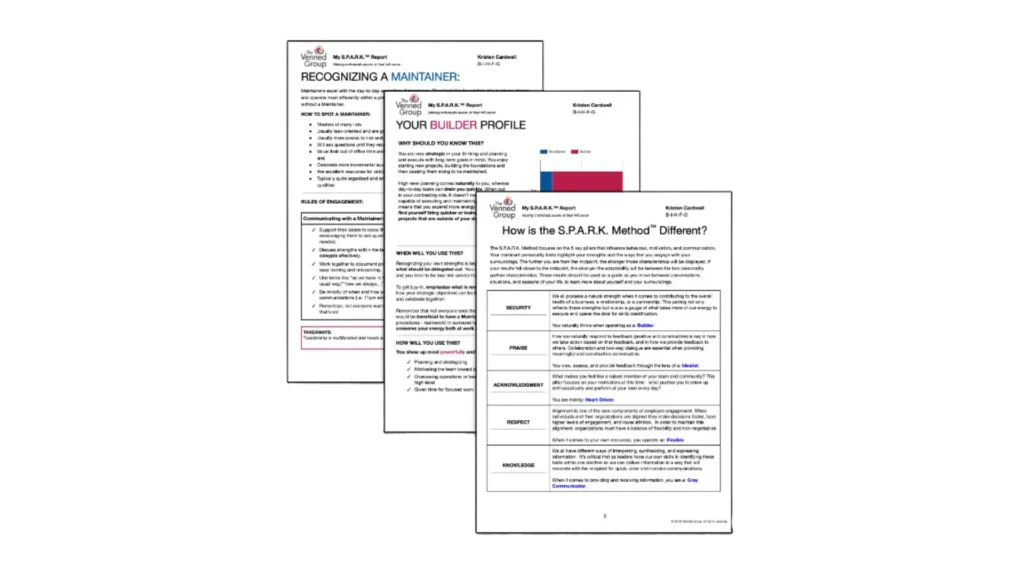
We start with self-awareness, using the proprietary S.P.A.R.K. Leadership Assessment to help managers understand their leadership style, strengths, and blind spots before they try to lead others differently.
We focus on the real leadership moments managers face every week: setting expectations, giving feedback, making decisions, managing tension, and translating strategy into work their teams can actually execute.
We blend group workshops with 1:1 coaching, so every manager gets practical guidance and direct support to apply what they learn with their own people.
Managers who can lead their teams, manage up, and collaborate across departments with more clarity and confidence.
Leaders who set clearer expectations and give feedback that changes behavior, not just fills time.
Stronger alignment between middle managers and senior leadership, with fewer mixed messages and fewer late surprises.
Managers who know when to decide, when to escalate, and how to communicate both without creating drag.
Leaders who understand how their daily decisions affect the business, not only their own teams.
Introduction to S.P.A.R.K. philosophies, course expectations, leadership goals, team objectives, success metrics, workplace style, and communication style. Leaders establish the baseline for how they currently show up and how the team needs them to lead.
Explore how security, assumptions, perceptions, and resource habits affect culture and performance. Leaders examine how they use time, energy, skills, and attention, then connect self-awareness to stronger emotional intelligence and clearer leadership choices.
Learn when praise works, how to use it well, and how feedback responsiveness shapes trust. Leaders practice noticing non-verbal cues, giving recognition with purpose, and regulating their own reactions before they lead the room.
Practice receiving feedback, giving direct feedback without deflating people, using formal tools such as performance reviews, and having informal conversations before small issues become expensive leadership problems.
Understand the difference between praise and acknowledgement, set expectations through clearer communication, and connect motivation to performance. Leaders learn how to motivate individuals and teams without guessing what matters to them.
Break down microcultures, boundaries, values, and team norms. Leaders learn how to respect differences, build ambassadorship organically, and understand how collaboration habits affect trust, communication, and daily execution.
Define knowledge baselines, identify what others need to succeed, and learn approaches for training, coaching, delegation, collaboration, and meetings. Leaders learn how communication styles affects the way ideas, decisions, and expectations land.
The S.P.A.R.K. Leadership Program runs across multiple cohorts, departments, and locations while holding to one consistent method, so a large rollout stays coherent from the first group to the last.
We run multi-cohort and multi-site engagements on one method and one standard, coordinated centrally, so every group gets the same quality and the same language. That shared language is the point. When hundreds of your leaders come out speaking it, alignment stops being a slogan and starts being how the organization runs.
Program fees for the S.P.A.R.K. Leadership Program range from $4,500 to $10,000 per person + HST, depending on cohort size, format, and engagement length.